Warli Art of Maharashtra | History, Features & Cultural Significance
Hey guys, I am Sonam – your supporter writer.
I hope you all are doing well and staying healthy. Today, in Episode 1 of my cultural series, we are going to explore something magical and very close to India’s heart – Warli Art from Maharashtra.
🎨 What is Warli Art?
Warli Art is one of the oldest tribal art forms of India, created by the Warli tribe of Maharashtra. It is unique because of its simple white stick-like figures drawn on a red or brown background.
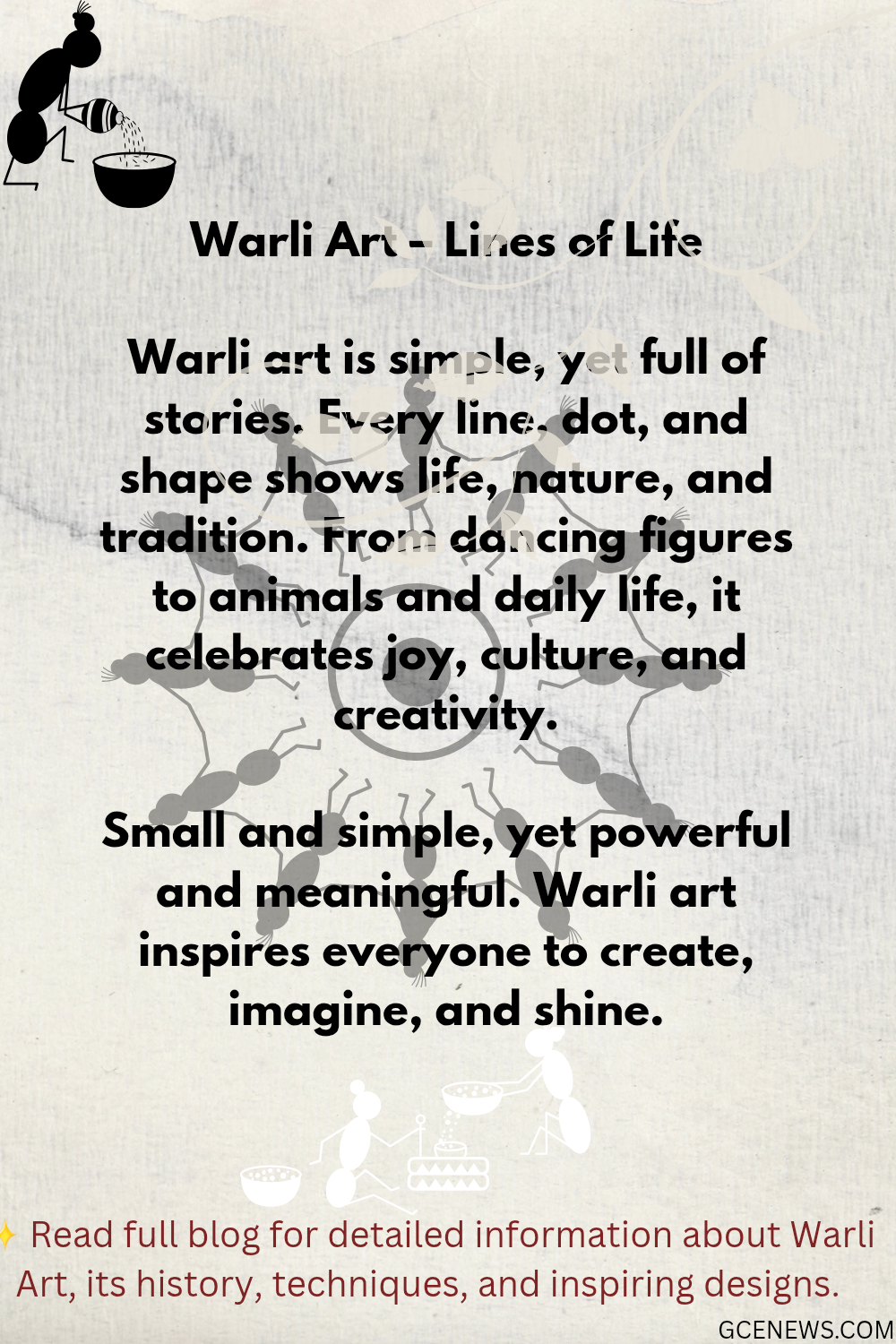
At first sight, it may look very simple. But in reality, each painting is a visual storybook that represents nature, community, and daily life.
📜 The History of Warli Art:-
Warli Art dates back to 2500–3000 BCE, around the time of the Indus Valley Civilization.
Since the Warli people did not have a written language, they used this art to record stories, rituals, and traditions.
Earlier, Warli was painted only on the walls of huts during weddings, harvests, and festivals.
The main idea was always about respecting Mother Nature and celebrating the cycle of life.
✨ Unique Features of Warli Art:-
1. Minimalistic yet meaningful – Only lines, circles, triangles, and dots, but they narrate deep stories.
2. No facial expressions – Figures are always faceless, showing universality of human life.
3. Community over individuality – Paintings never focus on one person, they always show groups dancing, farming, or worshipping.
4. Nature-centered – Trees, animals, rivers, and mountains are always part of the painting.
5. Circular compositions – Many Warli artworks have circular patterns, symbolizing life’s cycle.
🪵 Materials Used in Warli Art:-
Warli is completely eco-friendly because everything comes from nature:
Surface: Walls coated with cow dung + mud + red ochre.
Color: White pigment made from rice paste mixed with water and gum.
Brush: Bamboo stick chewed to form a fine brush.
Background: Red or brown, representing earth.
Paintings: Done mostly by tribal women during rituals and festivals.
🌸 Cultural Meaning of Warli Art:-
Warli is more than just art – it is the soul of Warli culture.
Marriage paintings (Lagnachauk) symbolize fertility and prosperity.
Tarpa dance circles show unity, equality, and the joy of togetherness.
Animals, trees, and rivers highlight respect for nature.
Life-cycle paintings reflect birth, marriage, and death – the eternal journey.
👉 In short, Warli is the visual philosophy of “man and nature as one.”
🎭 Themes in Warli Paintings:-
Some of the most popular scenes include:
Marriage rituals (Lagnachauk) with Goddess Palaghata.
Tarpa Dance – villagers dancing in circles around a musician.
Farming and Hunting – life based on agriculture.
Sacred Geometry – squares, triangles, and circles used for spiritual balance.
🖼️ Warli in the Modern World:-
Warli has beautifully travelled from mud walls to global platforms:
In the 1970s, artist Jivya Soma Mashe brought Warli Art into the spotlight.
Today, Warli designs are used in fashion, jewelry, home décor, murals, and even brand campaigns (Coca-Cola used Warli).
It is also promoted in handicrafts and eco-friendly souvenirs.
🌍 How to Experience Warli in Real Life:-
If you want to experience Warli closely, here are some tips:
1. Visit Warli Villages – Dahanu and Palghar in Maharashtra are the main hubs.
2. Workshops & Tours – Many NGOs organize Warli painting workshops where tribal artists teach directly.
3. Festivals – Try visiting during harvest festivals or weddings in tribal regions.
4. Handmade Souvenirs – Buy authentic Warli art items like wall hangings, sarees, pottery.
5. Support Local Artists – Online stores and government exhibitions feature Warli crafts.
👉 This way, you don’t just see Warli, you live it.
🔮 The Future of Warli Art:-
•The future of Warli looks very bright:
•Digital Platforms: Warli is part of digital illustrations, prints, and even NFTs.
•Eco-Friendly Trend: Its natural methods fit today’s sustainability movement.
•Tourism Boost: Warli villages are attracting cultural tourism.
•Global Reach: From walls in Maharashtra to galleries in Europe – Warli is now worldwide.
❓ Warli Art Q&A:-
Q1: Who created Warli Art?
It was created by the Warli tribe in Maharashtra thousands of years ago.
Q2: Why is Warli famous?
Because of its simple yet meaningful stick figures that narrate stories of life and nature.
Q3: What materials are used in Warli paintings?
Red ochre walls, white rice paste, and bamboo sticks as brushes.
Q4: Where can you see Warli paintings today?
In Maharashtra’s Palghar and Dahanu villages, exhibitions, and in fashion/décor items.
Q5: Is Warli Art dying?
Not at all. It is being revived through education, digital art, and global appreciation.
🌱 Final Thoughts:-
Warli Art is not just a painting – it is a living tradition, a way of storytelling, and a cultural treasure. From the huts of Maharashtra to international art galleries, Warli proves that simplicity is eternal.
✨ This was Episode 1 of my Cultural Series.
I hope you enjoyed discovering Warli Art with me.
👉 Tell me in the comments: Should I cover Rajasthan’s Mandana Art or Kerala’s Kathakali Dance in Episode next episodes?
Till then, keep smiling, keep learning.
– Sonam, your supporter writer 💌